Bandingkan kawat ganjal dan filter mesh didera oleh retensi partikel, kekuatan, pembersihan, tekanan drop dan kondisi proses.
Perkenalan
Wedge wire and sintered mesh are both metal filter constructions, but they beperilaku different in service. Salah satunya menggunakan luka kawat yang diprofilkan atau dilas menjadi layar bercacat. Yang lain menggunakan logam terikat mesh atau lapisan serat logam untuk menciptakan struktur filtrasi pori-pori.
Pilihan antara mereka tidak harus didasarkan pada materi saja. Ini tergantung pada ukuran partikel yang akan dihapus, perbedaan tekanan, metode pembersih, cairan, suhu, dan beban mekanis pada elemen.
Panduan ini membandingkan dua konstruksi dan menyediakan proses seleksi praktis untuk aplikasi penyaringan industri. Hal ini dimaksudkan sebagai tinjauan teknis awal; spesifikasi akhir harus dikonfirmasi dengan pemasok filter dan kebutuhan peralatan.
How Wedge Wire Filters Are Constructed
Sebuah filter wedge wire menggunakan kabel yang diprofilkan diatur di sekitar batang pendukung atau bingkai. Profil kawat menciptakan slot kontinyu dengan jalur aliran relatif terbuka. Lebar slot adalah spesifikasi kunci karena ini mengontrol ukuran partikel nominal yang dapat melewati layar.
Layar kawat Wedge sering digunakan untuk kasar untuk penyaringan medium, pencucian belakang, air, dan aplikasi di mana kekuatan mekanis dan daerah aliran terbuka sangat penting. Permukaan luar halus dapat membantu dengan membersihkan dalam beberapa desain.
Kinerja yang sebenarnya tergantung pada lebar slot, profil kawat, struktur dukungan, arah aliran, dan cara elemen dikaitkan. Sebuah layar wedge wire tidak dapat diubah dengan mesh ditenun atau elemen sintered hanya karena keduanya terbuat dari baja stainless.
How Sintered Mesh Filters Are Constructed
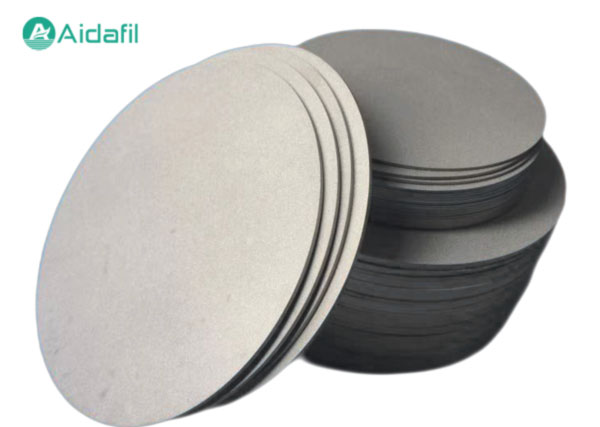
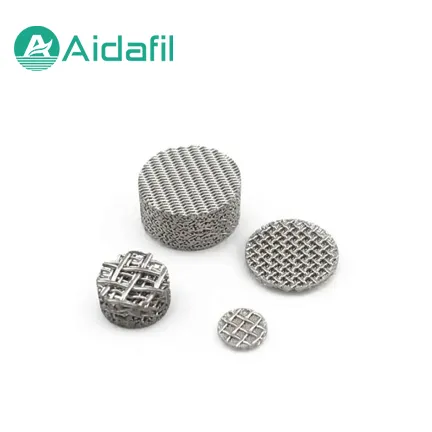
Filter sintered mesh dibuat oleh ikatan satu atau lebih lapisan logam mesh atau serat logam. Proses penangkaran menciptakan struktur pori-pori tetap dengan ukuran pori-pori dikendalikan dan meningkatkan stabilitas mekanis dibandingkan dengan berantakan mesh.
Filter yang disaring dapat dirancang untuk retensi partikel yang lebih baik dan dapat menyediakan area penyaringan besar dalam elemen kompak. Struktur mungkin termasuk lapisan pelindung, lapisan filtrasi, dan lapisan dukungan. Konstruksi yang tepat harus dikonfirmasi dari gambar produk.
Media logam lunak digunakan dalam suhu tinggi, tekanan tinggi, kental, atau kimia menuntut aplikasi di mana filter logam bersih mungkin cocok. Bersih-bersih dan regenerasi harus sesuai dengan kontaminasi dan struktur pori-pori.
Perbandingan di Gloance
Milik | Wedge Wire | Mesh Bersinar |
Mekanisme penyaringan | Slot yang dikendalikan antara kabel yang diprofilkan | Struktur logam berpori tetap |
Jangkauan retensi khas | Seringkali koordinasi, tergantung pada lebar slot | Dapat mendukung filtrasi halus tergantung pada konstruksi |
Flow area | Umum terbuka, dengan sebuah pola slot didefinisikan | Tergantung pada meph lapis dan ukuran pori |
Kekuatan mekanis | Kekuatan struktural yang baik ketika benar didukung | High when designed with suitable support layers |
Cleanability | Often suitable for backwashing or mechanical cleaning | Cleanable in some designs, but cleaning must suit the pore structure |
Pressure drop | Depends on slot width, flow area, and flow direction | Depends on pore size, media construction, and flow rate |
Best starting point | Coarse screening, separation, backwash, open-flow applications | Fine metal filtration, high-temperature or demanding process conditions |
The table is qualitative. It cannot replace a pressure-drop calculation, particle-retention review, or compatibility check for a specific process.
Compare Particle Retention Requirements
Start with the smallest particle that must be retained and the acceptable pressure drop. A wedge wire screen is often considered when the required slot is relatively open and the main goal is to retain larger solids while maintaining flow. A sintered element may be considered when finer filtration is required and the process can accept the associated pressure drop and cleaning requirements.
Do not compare only the nominal micron number. Ask how the rating was determined and whether it is a nominal or absolute value. The shape of the particles and the flow direction can affect the result.
Evaluate Mechanical and Pressure Conditions
Both constructions can be strong, but the support structure matters. Check the differential pressure across the element, the maximum pressure, the temperature, and any vibration or mechanical load. A filter that is strong in one direction may not be suitable if the flow can reverse or if the element is cleaned by high-pressure backflow.
Confirm the housing support and the sealing arrangement. A metal element may be durable, but a damaged seal or unsupported end cap can still allow bypass.
Consider Cleaning and Maintenance
Wedge wire screens are often selected where the process allows backwashing or mechanical cleaning. The open slot structure can release some contaminants more easily than a fine porous medium, but the result depends on the contaminant and the cleaning procedure.
Sintered elements can be cleaned in suitable applications, but the cleaning method must not damage the bonded structure or leave contamination trapped in the pores. Verify the recommended cleaning agent, temperature, pressure, and drying procedure with the supplier.
If cleaning is difficult or the contaminant cannot be removed reliably, a disposable or replaceable element may be a better service choice. The lowest purchase price is not the lowest lifecycle cost if the element cannot be cleaned effectively.
Review the Process Fluid and Temperature
Check corrosion resistance, temperature range, and compatibility with the fluid. Stainless steel grades are not equally suitable for every chemical environment. If the process contains chlorides, aggressive additives, or high-temperature oxidation, confirm the material with the supplier.
Also consider gasket and seal materials. The metal filter may be suitable for a high-temperature process, while the seal is not. The complete assembly must be reviewed.
Common Applications to Discuss with a Supplier
Typical questions include:
· Is the filter used for water, oil, gas, solvent, polymer, or another fluid?
· Is the main requirement coarse screening or fine particle removal?
· What is the normal and maximum pressure drop?
· Will the element be backwashed, chemically cleaned, or replaced?
· What are the temperature and corrosion conditions?
· What connection, diameter, length, and sealing arrangement are required?
These details make the difference between a general material comparison and a usable filter specification.
Common Selection Mistakes
One mistake is assuming that a finer filter is always better. A finer element may increase pressure drop, shorten service life, or become difficult to clean. Another is selecting a metal filter because it is reusable without checking whether the contaminant can actually be removed.
Teams sometimes compare a wedge wire slot size with a sintered mesh micron rating as if the numbers had the same meaning. The test method and filtration mechanism may differ. Finally, ignoring the seal, support, and housing interface can lead to a filter that appears to fit but does not perform reliably.