Compare nickel felt and nickel foam for filtration. Learn the differences in pore structure, filtration efficiency, permeability, pressure drop, strength, applications and material selection.
Nickel merasa and nickel foam are both porous nickel materials, but they are not interchangeable. Nickel felt is made from nonwoven nickel fibers and is generally selected for depth filtration and controlled pore structure. Nickel foam has an open-cell cellular structure and is often chosen for electrochemical, catalyst, thermal and high-porosity applications.
The right choice depends on what the material must do: retain fine particles, support a catalyst, conduct electricity, protect downstream equipment, allow high flow or survive repeated cleaning. Selecting by “porosity” alone can lead to the wrong material and poor long-term performance.
Nickel Felt vs Nickel Foam: Quick Comparison
| Milik | Nickel merasa | Nickel foam |
|---|---|---|
| Struktur | Nonwoven nickel fibers bonded by sintering | Open-cell cellular metal network |
| Mekanisme penyaringan | Three-dimensional depth filtration | Mainly open-cell flow path; often used with additional media or coating |
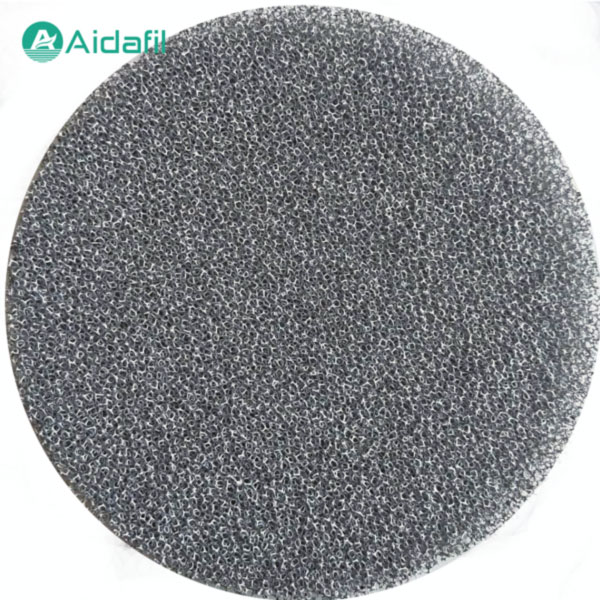
| Pore structure | Random fiber network with controllable pore size | Large open cells connected by struts |
| Fine-particle retention | Generally easier to specify for fine filtration | Usually less suitable as a standalone fine filter |
| Porositas | Can be engineered across a range of porosity levels | Typically high porosity with an open network |
| Pressure drop | Depends on fiber diameter, thickness, pore size and flow | Depends on cell size, thickness, compression and flow path |
| Dirt-holding capacity | Good depth-loading potential in suitable designs | Cell structure may retain large contamination but not fine particles |
| Mechanical formability | Can be cut, formed and combined with support layers | Can be compressed, rolled, coated or combined with other materials |
| Electrical conductivity | Conductive continuous metal network | Highly conductive open-cell network |
| Typical filtration role | Fine filtration, high-temperature filtration and depth filtration | Electrode substrate, catalyst support, thermal flow media and prefilter structure |
Apa itu perasaan Nickel?
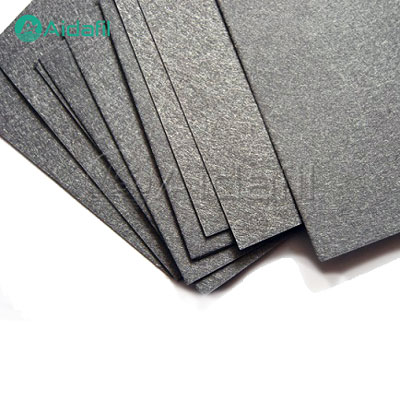
Nickel felt is a nonwoven metallic material made from nickel fibers. The fibers are formed into a web, compressed and sintered so that they bond at contact points. The finished material contains an interconnected network of pores.
In filtration, nickel felt is used as a three-dimensional medium. Particles can be captured on the upstream surface and within the fiber matrix. This can provide useful contaminant holding capacity when the material is correctly specified for the particle size, flow rate and allowable pressure drop.
Nickel felt is also used in catalyst support, electrochemical systems and selected thermal applications. Its performance depends on fiber diameter, thickness, porosity, pore size, permeability and sintering quality.
For a complete selection guide, see our detailed sintered metal fiber filtration overview.
What Is Nickel Foam?
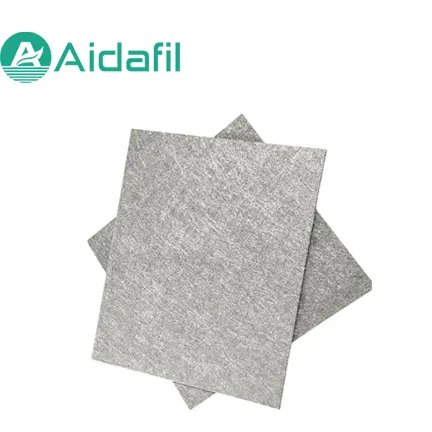
Nickel foam is a porous metal with a cellular, open-cell structure. The solid nickel forms a connected network of struts around open cells. The material can have very high porosity and a large accessible surface area.
Nickel foam is often considered for:
- Electrochemical electrodes and current collectors
- Catalyst support structures
- Battery and energy-storage research
- Thermal flow and heat-transfer structures
- Sound absorption and lightweight structural applications
- Prefiltration or support layers in combined filter designs
Nickel foam can be coated, compressed or combined with other materials. In filtration, it should not be assumed to provide the same particle-retention performance as a sintered fiber felt simply because both materials are porous and made from nickel.
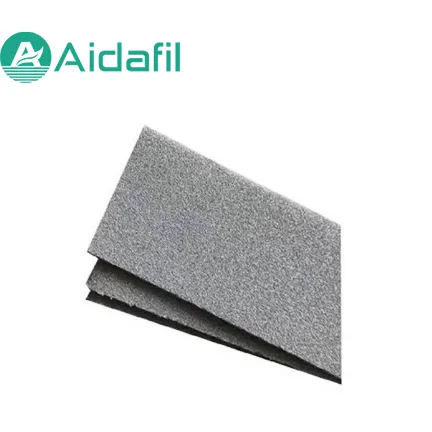
Pore Structure: The Main Difference
The most important difference is the geometry of the pore network.
Nickel merasa
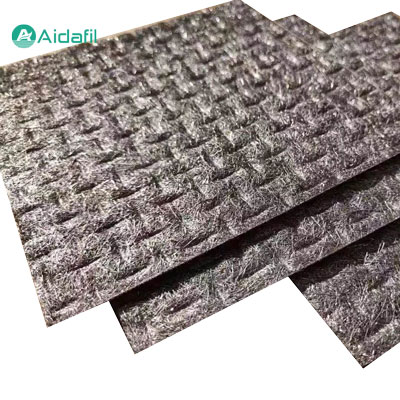
Nickel felt uses randomly oriented fibers. The spaces between fibers create a complex flow path with many small connections. Filtration can occur throughout the material rather than only on a single screen surface.
This structure can be adjusted through fiber diameter, web density, thickness and sintering conditions. The resulting material can be designed for different combinations of permeability, particle retention and dirt-holding capacity.
Nickel foam
Nickel foam contains larger open cells connected by metal struts. The flow path is more cellular and less fiber-like. The material can have excellent porosity and permeability, but its cell structure is not the same as a controlled depth-filter medium.
For fine particle retention, nickel foam may require a coating, a separate filter layer or a composite structure. The final filtration rating should be verified with an application-specific test.
Which Material Is Better for Fine Filtration?
For most fine-filtration duties, nickel felt is usually the more suitable starting point. Its nonwoven fiber structure provides a more controllable depth-filtration medium and can be specified with pore-size and permeability data.
Nickel foam may be more appropriate when the primary requirement is:
- Very high porosity
- A highly open flow path
- An electrode or catalyst substrate
- A lightweight conductive structure
- Support for another filtration layer
The decision should be based on the required downstream cleanliness, particle-size distribution, pressure drop and available installation space.
Pressure Drop and Dirt-Holding Capacity
Nickel foam is sometimes assumed to have lower pressure drop because its cells are large. This is not always true in a complete filter design. Compression, coating, contamination loading and the support structure can change the pressure drop significantly.
Nickel felt may have a higher pressure drop per unit thickness when specified for fine retention, but its depth structure can provide useful contamination holding capacity. A thinner felt with the same nominal pore size can behave differently from a thicker felt.
When comparing materials, request pressure-drop data at the actual flow rate and fluid properties. Air data cannot be used directly to predict performance in oil, polymer or another viscous liquid.
Mechanical Strength and Support
Both materials are metallic, but their mechanical behavior is different.
Nickel felt can be compressed, cut and combined with support layers. Its fiber structure may require support under high differential pressure or reverse-flow cleaning. The edge condition and sealing method are important for preventing bypass.
Nickel foam has a cellular structure with struts and open cells. It can be compressed or formed, but excessive compression may reduce porosity or damage the cell network. The support and compression requirements should be confirmed for the housing design.
Chemical Compatibility
Nickel felt and nickel foam use the same base metal family, so both require a chemical compatibility review. The form of the material does not remove the need to evaluate the process environment.
Check:
- pH and chemical concentration
- Chloride content
- Suhu operasi
- Oxidizing or reducing conditions
- Cleaning chemicals
- Start-up and shutdown conditions
- Contaminants that may concentrate in the filter
Nickel is useful in many alkaline and reducing environments, but it is not universally resistant to strongly oxidizing acids or every contaminated process stream.
Application Selection Guide
Choose nickel felt when:
- Fine particle retention is important
- Depth filtration is required
- The filter needs controlled pore-size and permeability data
- The application requires a formable metallic filter medium
- The material must be cut into discs, tubes or custom shapes
Choose nickel foam when:
- High open porosity is the primary requirement
- The material will be used as an electrode or catalyst substrate
- The application needs a conductive cellular structure
- The foam will be coated or combined with another filter medium
- Fine-particle retention is not the only performance target
Consider a composite structure when:
- Both high flow and fine retention are required
- The foam provides support and the felt provides filtration
- A support layer is needed for high differential pressure
- The housing requires graduated pore structure
How to Test and Compare Samples
Do not compare samples by a catalogue description alone. Request comparable data and test the materials under representative conditions.
- Measure thickness and basis weight at defined points.
- Record the pore-size or bubble-point test method.
- Measure air or liquid permeability using a stated test fluid and pressure.
- Test particle retention with the actual contaminant or a representative challenge.
- Measure pressure drop at the intended flow rate.
- Inspect the fiber or cell structure under magnification.
- Check for loose particles, oil, residue and edge damage.
- Evaluate the cleaning method and the change in pressure drop after cleaning.
RFQ Details for Nickel Felt or Nickel Foam
Provide the following information to the supplier:
- Material type under consideration
- Fluid or gas being processed
- Operating temperature and pressure
- Chemical environment and pH
- Target particle size or downstream limit
- Flow rate and allowable pressure drop
- Required thickness and dimensions
- Support, gasket and connection requirements
- Cleaning method and expected service life
- Required test reports and material traceability
For related metal filter formats, review the AIDA metal filter elements.
Common Selection Mistakes
- Assuming nickel felt and nickel foam have the same pore structure
- Comparing porosity without comparing pore size and permeability
- Selecting nickel foam as a fine filter without supporting test data
- Choosing nickel felt without confirming chemical compatibility
- Ignoring pressure drop at the actual flow rate
- Approving a sample without agreeing on production tolerances
- Using an untested cleaning method
- Failing to specify support and sealing requirements
Pertanyaan yang sering diajukan
Is nickel felt better than nickel foam for filtration?
Nickel felt is generally easier to specify for fine depth filtration because its nonwoven fiber structure can be controlled for pore size and permeability. Nickel foam may be better for high-porosity, electrode, catalyst or support applications. The correct choice depends on the process requirement.
Is nickel felt stronger than nickel foam?
Their mechanical behavior is different. Nickel felt can be flexible and formable depending on fiber and sintering conditions. Nickel foam can be compressed or formed, but its cellular structure may deform under excessive compression. The housing and support design should be tested for both materials.
Can nickel foam be used as a filter?
Yes, but its filtration role should be defined. Nickel foam is often used as a support, prefilter, electrode or catalyst substrate. It should not be assumed to provide fine-particle retention without a validated filter layer or application test.
Which material has higher porosity?
Nickel foam is often selected for very high porosity, but nickel felt porosity can also be engineered across a range. Porosity alone does not determine filtration performance because pore geometry and flow resistance are different.
Can nickel felt and nickel foam be combined?
Yes. A composite structure can combine the fine filtration behavior of nickel felt with the open structure or support properties of nickel foam. The interface, support method, cleaning and pressure drop should be tested as a complete design.
Is nickel foam corrosion resistant?
Nickel foam uses nickel as the base material, but chemical compatibility still depends on the environment. Check pH, chlorides, temperature and oxidizing conditions before selecting it.
Kesimpulan
Nickel felt and nickel foam are both useful porous nickel materials, but they solve different problems. Nickel felt is generally the stronger starting point for controlled depth filtration and fine particle retention. Nickel foam is often better suited to high-porosity, electrochemical, catalyst, thermal or support applications.
The safest approach is to define the process conditions, request comparable pore-size and permeability data, test representative samples and verify production traceability before placing an order.
Need help comparing nickel felt and nickel foam? Send us the fluid or gas, operating conditions, required retention, flow rate, pressure-drop limit and available space. Our team can review the application and help identify the more suitable material structure.
Visit the Katalog produk AIDA, review the filter selection FAQ, or contact our technical team.